



When That Official Stamp Becomes Absolutely Essential
When is a notary stamp non-negotiable? Typically, it’s for documents with significant legal or financial weight. Notaries act as gatekeepers, preventing fraud by confirming identity and free will, which upholds our legal system.
Are you sure you need a notary for this document?
We often get this question. Notarization is usually required by a third party, such as a bank, court, or government agency. Look for phrases like “Signature must be notarized” on the document. If unsure, always check with the requesting entity. A wrongly executed document causes delays and legal issues. Better safe than sorry.
- Real Estate Transactions: Deeds, mortgages, liens, and other closing documents for buying, selling, or refinancing property require notarization. This is a major category.
- Power of Attorney: Granting someone authority for financial or medical decisions requires notarization to be legally binding, protecting both parties.
- Affidavits and Sworn Statements: For formal declarations under oath, such as legal disputes, insurance claims, or immigration, a notary administers the oath and witnesses your signature.
- Loan Documents: Many personal, business, or refinancing loans beyond mortgages may require notarization to verify identity and intent.
- Advanced Healthcare Directives (Living Wills): These documents outline medical care wishes if you become incapacitated. Notarization ensures your wishes are respected.
- Minor Travel Consent Forms: For international child travel with one parent or other adults, many countries and airlines require a notarized consent form from absent parent(s). This is a vital safeguarding measure.
- Business Contracts: Not all business contracts require notarization, but some, especially those involving significant assets or legal liabilities, might. Always check terms.
If a document needs to be legally enforceable, particularly across parties or involving high-stakes assets, a notary adds undeniable authenticity. It’s a legal safeguard, not just a stamp. We’ve seen how missing notarization halts everything, from phone activation to fund receipt. Veekay ensures our community can rely on us for these time-sensitive, stressful moments.
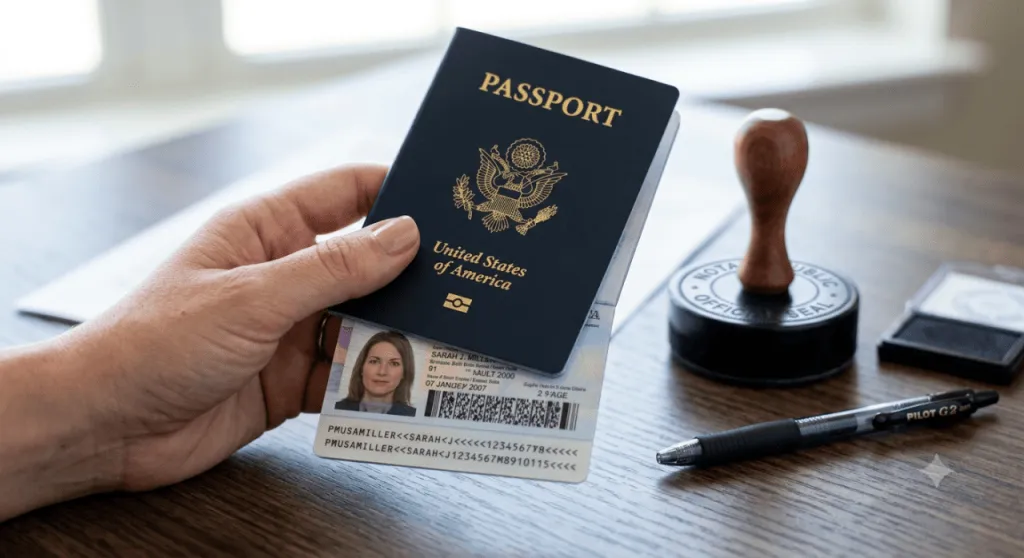
Navigating the “What to Bring” Maze for Your Notarization
You know you need a notary. The next step, what to bring, often causes confusion. This is a strict, state-mandated requirement. Without the correct items, we cannot notarize your document, leading to frustration. We’ll help you avoid a wasted trip by outlining the essentials.
Can I use my old, expired ID?
No. This is a hard stop. You need a valid, unexpired government-issued photo ID with your signature. This is non-negotiable. Without it, a notary cannot verify your identity, preventing notarization. It’s fundamental to preventing fraud.
- State-Issued Driver’s License or ID Card: Most common and easiest. Must be current.
- U.S. Passport or Foreign Passport: U.S. Passport or Foreign Passport (foreign generally needs U.S. Customs stamp).
- U.S. Military ID Card: Active duty, retired, or dependent IDs are usually accepted.
- State, County, and Local Government IDs: Acceptable if official, photo-bearing, and unexpired.
- Tribal Identification Card: Federally recognized tribal IDs are often valid.
Expired IDs, social security cards, birth certificates, credit cards, or school IDs won’t work. If unsure, call your Veekay Financial location. We prefer a call over a wasted trip. Honestly, this is where most people get tripped up. Just double-check your ID’s expiration date before you even leave the house.
Do I need to sign the document before I get there?
Crucially: do not sign your document beforehand. The notary must witness your signature to verify willingness and understanding. If pre-signed, we may not proceed. Bring the document filled out, but leave the signature line blank. The only exception is an acknowledgment, where you affirm an existing signature is yours. Even then, let the notary guide you. Seriously, this one’s a deal-breaker. We can’t un-sign a document.
- All Pages of the Document: Bring the entire document, not just the signature page. The notary needs to review the full document for completeness and context.
- Witnesses (if required): If your document requires witnesses (e.g., wills, deeds), they must be present with valid IDs. Notaries generally cannot act as witnesses, nor can we provide them. You must arrange for witnesses.
- Payment: Notary fees are state-set and modest. At Veekay Financial, pay with cash, card, or a pre-paid card. Check our services page for pricing or ask in-store. We ensure transparency.
- An Understanding of Your Document: Notaries cannot give legal advice. Have a basic understanding of what you’re signing. We witness, we don’t explain legal implications. Address content questions with the document’s originator or a legal professional before your visit.
We’ve seen too many people frustrated because they didn’t have the right ID or signed too early. Our goal is to make it simple, but we can’t bend the rules. Preparation is key to a smooth notarization.
The Veekay Financial Difference: Your Local Notary Connection
Veekay Financial is more than check cashing or money transfers. We’re a hub for essential local financial services, including readily available notary services. In our community, accessibility and trust are paramount. You shouldn’t need to drive far or wait days for notarization. We aim to be your convenient, reliable neighborhood option.
Why choose a local shop over a big bank or online notary?
With many options, why choose us? Big banks often restrict notary services to account holders, with limited hours or long waits. Online notaries are growing but aren’t for every document or individual, especially if tech-averse or for documents requiring in-person presence due to state law. We offer direct, in-person service, providing clear guidance and peace of mind from a face-to-face transaction. That personal touch is hard to replicate online. Frankly, some things just work better in person. You get answers, not chatbots.
Our business is built on being a trustworthy resource for financial services and mobile device repair. Notary services fit this mission, bridging everyday needs with legal formalities. We simplify, not complicate.

Frequently asked questions
How much does a notary service cost?
Notary fees are state-set and modest, often just a few dollars per signature. Veekay Financial adheres to these limits for fair pricing. Call your local branch or check our services page for current fees.
Can a notary provide legal advice?
No, notaries cannot provide legal advice. Their role is to verify identity, witness signatures, and administer oaths. For content or legal implication questions, consult an attorney or the document provider before notarization.
What if my ID is expired or lost?
Notaries cannot accept expired IDs; it must be current and valid. If lost, obtain a new government-issued photo ID before notarization. This is a strict state requirement with no exceptions.
Can I get a copy of my document certified by a notary?
Notaries generally cannot “certify” vital record copies (birth, death, marriage certificates); obtain these from the issuing agency. However, a notary can sometimes perform a “copy certification by document custodian,” where the presenter signs an affidavit affirming it’s a true copy, which the notary then notarizes. State requirements vary, so confirm for your document.
Do I need an appointment for notary services at Veekay Financial?
Appointments aren’t always required, but we recommend calling your Veekay Financial location ahead. This ensures a notary is available and helps confirm what to bring, making your visit efficient and minimizing wait time.